Easiest Way To Manage Bitcoin With Business Finances
Highlights
- Multi-signature security is the corporate standard – Rather than relying on a single password or executive to authorise transactions, businesses are encouraged to implement “multi-sig” wallets, where multiple private keys are required. For example, a 2-of-3 setup means at least two out of three authorised directors must cryptographically sign off before funds can move, virtually eliminating the risk of internal embezzlement.
- Volatility can be completely bypassed at checkout – Payment gateways can instantly convert Bitcoin into local fiat currency at the exact moment of a customer’s transaction, meaning the customer pays in crypto while the business receives a guaranteed fiat amount – entirely sidestepping exposure to price swings.
- Every Bitcoin sale is a taxable event – Each time a business spends Bitcoin – whether on office supplies, paying a developer or server hosting – it is technically a taxable event, requiring the business to calculate and record any capital gain or loss based on the difference in value between acquisition and disposal.
- International payroll can be funded in fiat but paid in Bitcoin – Platforms like Bitwage or Deel allow businesses to fund their payroll entirely in fiat currency while employees elect to receive a portion (or all) of their salary in Bitcoin, enabling contractors in emerging markets to receive wages in minutes rather than days, bypassing heavy remittance fees.
- Traditional banks remain a major obstacle – Many legacy banks maintain conservative risk profiles and have been known to freeze accounts associated with crypto exchanges without warning, making it critical for crypto-forward businesses to seek out banking partners with seamless API integrations with major exchanges and high-volume fiat on/off-ramp support.
Overview
The integration of digital assets into corporate treasuries is no longer a fringe concept reserved for tech startups; it is rapidly becoming a standard operational strategy for modern enterprises. Whether you are aiming to facilitate faster cross-border payments, attract a broader demographic of tech-savvy customers or diversify your treasury reserves, Bitcoin offers unparalleled utility. However, merging decentralised digital currency with traditional fiat-based accounting systems can feel like navigating an administrative minefield.
For many entrepreneurs and financial directors, the primary hurdle is not acquiring the asset but maintaining pristine books. Fortunately, the infrastructure supporting institutional digital assets has matured significantly. Today, the easiest way to manage bitcoin with business finances involves leveraging a combination of automated software, secure storage protocols and clear internal policies.
In this comprehensive guide, we will explore practical, actionable strategies to seamlessly blend digital assets into your company’s financial ecosystem without creating a logistical nightmare for your accounting department.

Establishing A Secure Foundation: Wallets And Accounts
Before you can accept your first Satoshi or pay an invoice in Bitcoin, you must establish a secure and compliant digital infrastructure. Treating corporate Bitcoin holdings with the same rigour as your traditional bank accounts is non-negotiable.
Opening Your Corporate Account
The first step is setting up a corporate digital asset account. Unlike a personal retail account, a corporate account requires rigorous Know Your Customer (KYC) and Anti-Money Laundering (AML) documentation. You will typically need to provide your certificate of incorporation, a list of active directors, proof of business address and documentation detailing your beneficial owners. Institutional exchanges like Coinbase Prime, Kraken Business or Gemini offer bespoke services tailored for high-volume corporate clients, complete with dedicated account managers and enhanced reporting features.
Selecting The Right Storage Method
Once your account is live, you must decide how to store your assets. This brings us to the debate of custodial vs non-custodial business wallets.
- Custodial Wallets: These are managed by a third-party service (like an exchange). They offer convenience and easier account recovery, making them ideal for businesses that prefer a hands-off approach. However, you are entrusting a third party with your private keys.
- Non-Custodial Wallets: These give you absolute control over your private keys. While this eliminates counterparty risk, it places the entire burden of security squarely on your organisation. If you lose your keys, your company’s funds are permanently inaccessible.
Implementing Robust Security Protocols
For businesses managing substantial sums, relying on a single password or a lone executive to authorise transactions is highly irresponsible. The industry standard is to implement multi-signature security for corporate crypto funds.
Often referred to as “multi-sig”, this technology requires multiple private keys to authorise a single transaction. For example, a company might set up a 2-of-3 multi-sig wallet, meaning that out of three authorised directors, at least two must cryptographically sign off on a payment before the funds can move. This setup virtually eliminates the risk of internal embezzlement and ensures that the loss of one device does not result in compromised funds.
Streamlining Payments And Managing Risk
Accepting Bitcoin can dramatically reduce transaction fees and eliminate the risk of credit card chargebacks. However, the operational mechanics must be frictionless for both the merchant and the consumer.
Choosing A Payment Gateway
To seamlessly accept digital payments, you must rely on the best bitcoin payment gateways for merchants. Platforms such as BTCPay Server, BitPay and CoinGate allow you to generate custom invoices and checkout pages that integrate directly into e-commerce platforms like Shopify, WooCommerce or Magento.
- BTCPay Server: A fantastic open-source, non-custodial option that charges zero fees, though it requires some technical expertise to host.
- BitPay: A fully managed, custodial service that handles the heavy lifting, making it exceptionally user-friendly for businesses without an in-house IT team.

Handling Market Volatility
A common objection from financial controllers is the notorious price fluctuation of digital assets. Mitigating bitcoin price volatility in treasury management is crucial if your business operates on thin margins. You can not afford an invoice to lose 10% of its value between the time a customer pays and the time you pay your suppliers.
To combat this, many merchants utilise instant fiat-to-crypto settlement for retail. When a customer pays in Bitcoin at the checkout, the payment gateway instantly converts the cryptocurrency into your local fiat currency (such as Pounds Sterling or AU Dollars) at the exact moment of the transaction. The customer gets the flexibility of paying with digital assets, whilst your business receives guaranteed fiat value, entirely side-stepping exposure to market dips.
The Financial Controller’s Guide To Crypto Accounting
The true test of integrating digital assets lies in the bookkeeping. Traditional accounting ledgers were simply not designed to handle assets that fluctuate in value every second, possess eight decimal places and operate across hundreds of distinct blockchain networks.
Upgrading Your Software Stack
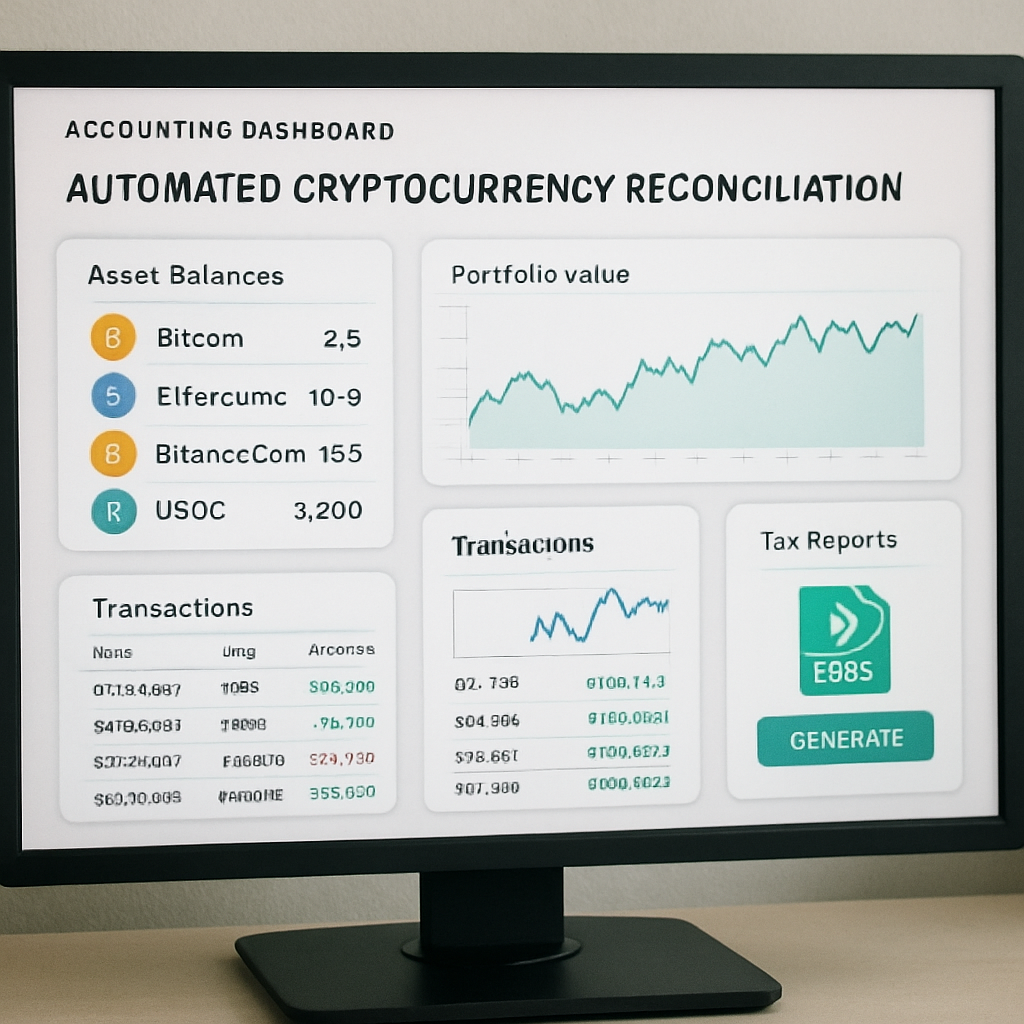
Attempting to manage crypto transactions via manual spreadsheets is a recipe for auditing disasters. You need to utilise dedicated crypto accounting software for small business and enterprise operations alike. Platforms such as Tactic, Cryptio and Bitwave act as a bridge between the blockchain and your traditional general ledger.
These tools read data directly from your wallets and exchange accounts, auto-categorise transactions, calculate cost bases and sync seamlessly with platforms like Xero, QuickBooks and NetSuite. By integrating bitcoin into existing accounting workflows, your finance team can reconcile digital asset transactions with the same ease as a traditional bank feed.
Tracking Expenses Accurately
Understanding how to track cryptocurrency business expenses is vital for accurate tax reporting. Every time your business spends Bitcoin – whether buying office supplies, paying a web developer or covering server hosting – it is technically a taxable event.
To track these efficiently:
- Timestamp Every Transaction: Record the exact fiat value of the Bitcoin at the specific date and time the transaction occurred.
- Maintain Clear Receipts: Ensure that the blockchain transaction ID (TxID) is attached to the traditional PDF invoice in your accounting software.
- Calculate Gains/Losses: Because the value of Bitcoin likely changed between the time you acquired it and the time you spent it, you must record the capital gain or loss on that specific disposal. Automated software handles this via First-In-First-Out (FIFO) or Specific Identification accounting methods.
Navigating Accounting Standards
A frequent question from corporate boards is: is bitcoin considered a capital asset for companies? In most jurisdictions, including the AU and the US, Bitcoin is not treated as traditional cash or foreign currency for tax purposes. It is generally classified as property or an intangible asset, meaning capital gains tax rules apply to its disposal.
Legal And Tax Compliance
Operating in the digital asset space requires a proactive approach to regulatory compliance. Ignorance of the law is never a valid defence during a tax audit.
Fulfilling Legal Obligations
Before launching your crypto initiative, you must understand the legal requirements for accepting bitcoin payments in your operating jurisdictions. While accepting Bitcoin is perfectly legal in most Western nations, businesses must still comply with standard consumer protection laws, apply correct GST or Sales Tax to the underlying goods sold and adhere strictly to anti-money laundering (AML) directives. If your business acts as a crypto custodian or exchange for third parties, you may also require specific regulatory licences from bodies.
Cross-Border Tax Reporting
Digital assets operate on a global scale, meaning your business might have multi-jurisdictional tax obligations. For businesses that have an Australian footprint, Australian subsidiaries or are navigating dual compliance, reporting corporate bitcoin transactions to the ATO is a highly scrutinised process.
The ATO requires meticulous documentation of all digital asset activities. Businesses must report crypto payments on forms such as for contractor payouts and for reporting sales and dispositions of capital assets. Failing to accurately report the cost basis and fair market value of these transactions can result in severe financial penalties. The key to pain-free reporting is consistent, automated record-keeping throughout the financial year, rather than scrambling to decode blockchain explorers during tax season.
Advanced Operations: Payroll And Banking
As your company becomes more comfortable with digital assets, you can begin to leverage Bitcoin for more advanced corporate treasury functions.
Streamlining International Payroll
If your business employs remote talent or international freelancers, traditional cross-border bank transfers can be agonisingly slow and expensive, often laden with hidden correspondent banking fees.
Automating cryptocurrency payroll processing offers a highly efficient alternative. Using platforms like Bitwage or Deel, businesses can fund their payroll entirely in fiat currency, whilst employees can elect to receive a percentage (or all) of their net salary in Bitcoin. Alternatively, you can pay directly from your corporate multi-sig wallet. This allows contractors in emerging markets to receive their wages in minutes rather than days, bypassing restrictive local banking infrastructure and heavy remittance fees.
Securing The Right Banking Partner
Perhaps the most frustrating bottleneck for crypto-forward businesses is the traditional banking sector. Many legacy, high-street banks maintain highly conservative risk profiles and have been known to freeze accounts associated with crypto exchanges without warning.
To ensure uninterrupted operations, it is imperative to secure crypto-friendly banking solutions for entrepreneurs. Some banks understand the nuances of Web3 and digital asset treasuries. They provide seamless API integrations with major crypto exchanges, allow for high-volume fiat on-ramps and off-ramps and will not penalise your business for interacting with the blockchain economy. Establishing a relationship with a forward-thinking banking partner ensures that your fiat liquidity remains as fluid and accessible as your digital assets.

Conclusion
Transitioning your corporate treasury to accommodate digital assets does not have to be an operational burden. While the underlying technology of the blockchain is complex, the user interfaces and enterprise tools available today are remarkably intuitive.
Ultimately, the easiest way to manage bitcoin with business finances is to treat it with the same rigorous procedural respect as traditional fiat, whilst utilising modern automation. By securing a reliable corporate account, implementing robust multi-signature security, leveraging instant-settlement payment gateways and deploying specialised accounting software, you can remove the friction from crypto management.
Embracing Bitcoin is a powerful way to future-proof your business, tap into new global markets and optimise your treasury. With the right infrastructure in place, your finance team can confidently navigate the digital economy, ensuring compliance, security and sustained growth for your enterprise.